
What Types of Peptides Do Factories Produce? How to Choose for Different Applications?
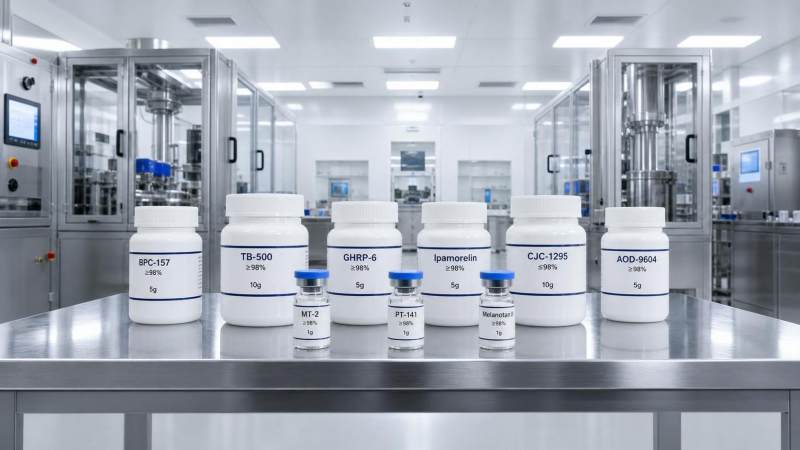
With the booming demand for bioactive peptides across health and beauty industries, understanding what peptide manufacturers can produce and how to choose the right raw materials is crucial for ensuring product safety, compliance, and efficacy.
1. Common Types of Peptide Products Produced by Factories
Modern peptide manufacturing facilities generally utilize enzymatic hydrolysis or chemical synthesis (such as Solid-Phase Peptide Synthesis - SPPS) to manufacture two main categories of peptide raw materials:
Small Molecule Active Peptides (Oligopeptides): These generally consist of 2 to 10 amino acids with a molecular weight of under 1000 Daltons. Their core benefit is high bioavailability, allowing them to be directly absorbed by the human body without undergoing complex digestion. Common examples include soy peptides, corn peptides, and marine collagen peptides.
Custom Cosmetic Peptides: These are functionally targeted peptide chains designed for specific biological pathways, such as signal peptides (boosting collagen synthesis) and neurotransmitter-inhibiting peptides (smoothing expression lines). Their purity typically exceeds 95% or 98%.
2. Tailoring Your Choice to Different Application Fields
Because regulatory baselines and technical specifications vary widely across industries, selection should be guided by your target application:
3. Compliance and Advertising Guidelines (Google Ads & Regulatory Alignment)
When advertising or optimizing your web pages for global search and Google Ads, adhering to strict compliance frameworks is non-negotiable to avoid ad disapprovals or legal penalties:
No Medical Claims for Food & Cosmetics: Never use therapeutic or curative claims (such as "cures disease," "reverses aging," or "prevents illnesses") for cosmetic or food-grade peptides. Focus instead on scientific formulations and general physical maintenance.
Verifiable Scientific Proof: Ensure that any structural or efficacy claims of your ingredients can be backed up by verifiable scientific literature, Certificates of Analysis (COA), or third-party laboratory reports.
By understanding these manufacturing categories and compliance boundaries, you can effectively source the appropriate peptide materials and build a robust, globally competitive product line.