
Key Factors to Consider When Selecting High-Quality Peptide Raw Material Suppliers
With the rapid development of biotechnology, peptide raw materials are being increasingly utilized in cosmetics, health foods, and pharmaceuticals. Choosing a robust and compliant peptide raw material supplier is essential to ensuring the safety, efficacy, and consistency of your end products. When evaluating and screening potential manufacturing partners, businesses should focus on several critical dimensions.
1. R&D Capabilities and Technical Expertise
A premier peptide supplier should act not just as a manufacturer, but as a technical collaborator.
Custom Synthesis Capability: Assess whether the supplier can synthesize custom peptide sequences, apply specific chemical modifications, or meet unique purity requirements according to your formulation needs.
Scientific Team Background: Verify if their R&D team possesses strong backgrounds in biology, chemistry, or pharmacology to provide expert formulation and application support.
Efficacy Verification: Check if they can provide reliable in vitro, cellular, or clinical trial data. Objective scientific literature and experimental reports are crucial for backing up your product claims.
2. Strict Quality Control and Global Certifications
Compliant production environments and rigorous testing protocols are non-negotiable baselines for ensuring product safety.
Industry Certifications: Confirm whether the supplier holds authoritative certifications such as GMP, ISO 9001, ISO 22000 (for food-grade ingredients), or COSMOS / ECOCERT (for cosmetic-grade ingredients).
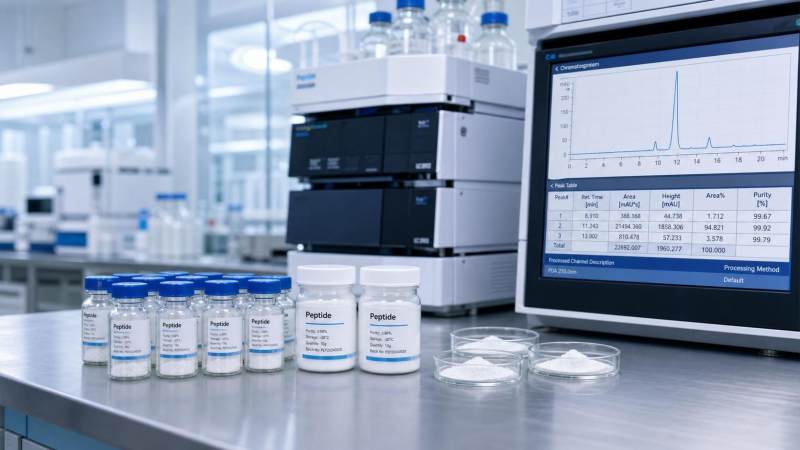
Comprehensive Certificates of Analysis (COA): Ensure every batch comes with detailed COAs, including High-Performance Liquid Chromatography (HPLC) for purity analysis and Mass Spectrometry (MS) for structural identification. Active cosmetic peptides generally require purities of 95% or 98% or higher, along with strict controls on heavy metals and microbial limits.
3. Production Capacity and Batch-to-Batch Consistency
Commercial projects demand consistent, uninterrupted material supply chains.
Scalability: Ensure the supplier’s annual production capacity can scale smoothly alongside your business—from initial lab-scale trials and pilot testing to high-volume commercial production.
Batch-to-Batch Consistency: A mature and stable manufacturing process is required to ensure that the color, solubility, and biological activity of the peptides remain identical from batch to batch, preventing quality fluctuations in your final retail products.
4. Regulatory Compliance and Global Supply Chain Support
For brands targeting international markets, adherence to global regulations is critical to avoiding regulatory roadblocks.
Regulatory Alignment: Check if the peptide ingredients comply with local regulations in your target markets (such as China's IECIC/INCI list, EU REACH regulations, or US FDA cosmetics registration).
Logistics & Documentation: Determine if the supplier is experienced in international shipping and customs clearance. They should be able to promptly provide comprehensive Safety Data Sheets (SDS/MSDS), Certificates of Origin, and other export-related documentation.
Conclusion
Selecting a peptide raw material supplier is a strategic, multi-step process. Beyond reviewing certifications, it is highly recommended to conduct sample testing, technical audits, trial formulations, and on-site factory visits to establish a secure, long-term, and mutually beneficial supply chain.